
Hybrid Product Overview of Multifunctional Plant-Powered Skincare
Today’s market is saturated with beauty products. It seems there are several products for every part of our face and

There was a time when beauty meant connection. Connection to people, to purpose, and to the plants that made us feel alive in our own skin. Skincare wasn’t just product; it was practice. It was shared wisdom and careful ritual. It was passed down through hands and generations, guided by nature and intuition.
But between the early days of one-on-one consultations and today’s endless retail aisles of identical bottles, beauty lost its center. What began as an intimate craft has become a mass-production cycle that prizes uniformity, speed, and shelf stability over true skin health. What was once a celebration of vitality is now an industry built on endurance.
It didn’t start this way and it doesn’t have to stay this way.
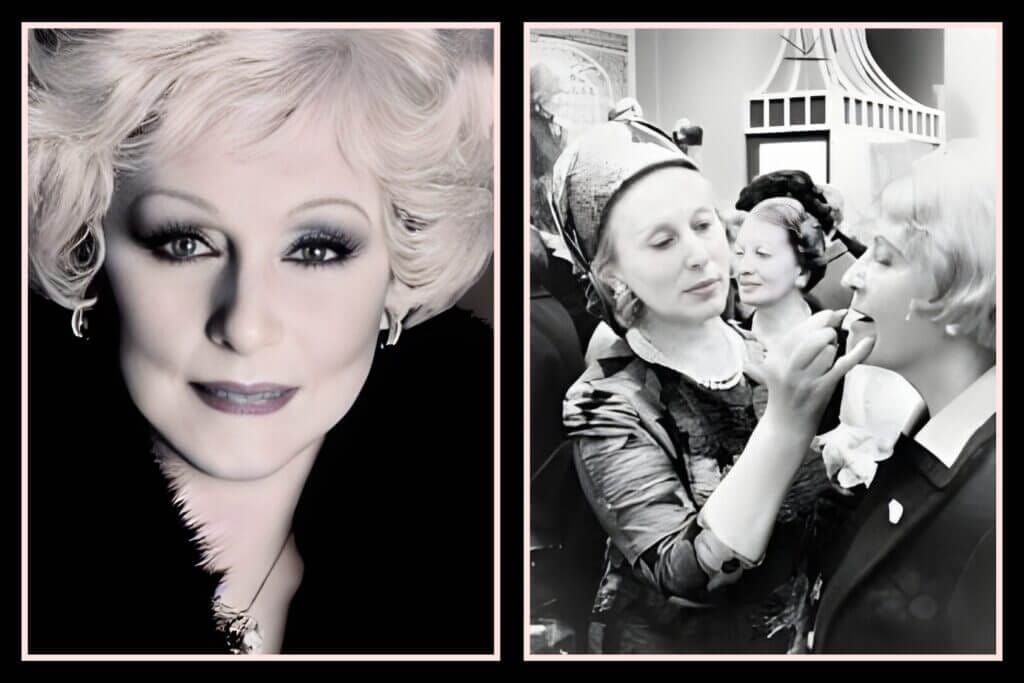
The modern beauty landscape owes its foundation to a handful of visionaries who started small, with purpose. Brands like Mary Kay, Avon, and Estée Lauder began as missions before they became machines. Their founders were not faceless corporations. They were individuals who believed in empowerment and in the transformative potential of confidence.
Mary Kay Ash, for example, launched her business with five products and a dream of giving women the opportunity to succeed on their own terms. Her model thrived not because she had the biggest advertising budget, but because she built community. She connected people through education, empathy, and encouragement.
That early model of beauty worked because it was personal. Products were created with care, meant to serve people, not systems. But as success grew and ownership shifted, the mission evolved. The drive to empower became a drive to expand. And expansion came with a price.
To serve the growing demands of retail chains and global distribution, formulas had to change. Suddenly, products needed to travel farther, sit longer, and look identical on every shelf across every continent. The result was the quiet replacement of living botanicals with synthetic chemicals designed not to feed the skin, but to feed the system.
The synthetic revolution in skincare didn’t happen because chemists discovered something superior to nature. It happened because the retail model required it.
When beauty entered big box retail, it became subject to rules that had nothing to do with biology. Long shelf lives were rewarded. Predictable consistency was prioritized. Products that could withstand time, temperature changes, and transport were favored over those that could genuinely transform the skin.
To make that possible, formulators leaned heavily on petrochemicals, silicones, and synthetic preservatives. These ingredients were stable, cheap, and easy to reproduce. They also stripped away much of what made skincare truly effective which is its living, active nature core.
True botanicals can vary slightly from batch to batch. Their color or scent might shift depending on harvest season or extraction method. But that’s part of what makes them powerful: they are dynamic, intelligent, and biologically aligned with not just the skin, but our entire anatomy.
In chasing synthetic perfection, the industry lost its biological intelligence.
At the heart of this transformation lies a simple equation: longer shelf life equals lower risk.
Big box retail operates on inventory cycles and financial forecasting. The longer a product can survive without spoiling, the less waste a retailer faces and the more stable the profit margin becomes. That financial incentive quietly reshaped the way products are formulated.
Instead of focusing on nourishment and efficacy, brands began to prioritize durability. Creams were no longer designed to deliver vitamins that degrade naturally; they were engineered to resist decay altogether. But the ingredients that make a product resistant to time also make it resistant to life.
As a result, the skin — a living, breathing organ — is often coated in layers of substances that provide texture and gloss but little nourishment. These products don’t harmonize with the body’s natural processes. They simply perform on the surface, giving the illusion of health while starving the skin of what it truly needs.

Synthetics offer an easy path to consistency. They ensure that every jar looks identical, every fragrance note matches, and every cream feels exactly the same on the fingertips.
But in real skincare, sameness is not the goal. The skin is not static; it is responsive and ever-changing. It reacts to environment, diet, stress, hormones, and countless subtle shifts within the body. The most intelligent formulations work with that variability.
Natural actives like vitamins, antioxidants, oils, and plant extracts all interact dynamically with the skin’s own ecosystem. They restore balance rather than impose control. When we trade this living intelligence for chemical uniformity, we gain stability but lose synergy.
Perfection on the shelf has replaced performance on the skin.

Now, in the mid-2020s, we’re witnessing a rebirth. Smaller brands, wellness practitioners, and formulators are returning to craft, transparency, and science-backed nature and in doing so they are reclaiming the connection that once defined beauty.

The future of skincare lies in what can be called Intelligent Beauty, a philosophy rooted in plant science, biocompatibility, and integrity. Intelligent beauty recognizes that true sustainability isn’t about making something last forever; it’s about creating something that works while it’s alive.
This approach leans on natural antioxidants and bio-preservatives like vitamin E and green tea. It values freshness over fossilization, small-batch production over global warehousing, and supply chains that nurture both people and planet.
It’s about embracing the truth that longevity doesn’t belong on a shelf — it belongs in the skin.
The real challenge isn’t just changing ingredients; it’s reforming the structure that rewards the wrong things. The current retail system prizes predictability and profit margins, not performance or purpose.
But that system is cracking. Consumers are more informed than ever. They’re reading labels, asking questions, and expecting transparency. They want fewer products, but more purpose. They’re ready for an industry that values integrity as much as innovation.
This is where the next generation of brands — those like Potency No. 710 — come in. We’re not trying to fit into the old system; we’re building a new one. One that honors the intelligence of the skin, the wisdom of nature, and the power of formulation grounded in truth.
Mary Kay once said, “Pretend that every single person you meet has a sign around their neck that says, ‘Make me feel important.’”
That quote still resonates because it captures something the beauty industry has forgotten: beauty was never about perfection. It was about connection — about helping people feel seen, confident, and alive in their own skin.
Maybe the industry doesn’t need more products. Maybe it just needs more purpose.
Because beauty was never meant to be mass-produced.
Today’s market is saturated with beauty products. It seems there are several products for every part of our face and

In today’s fast-paced world, even self-care has fallen victim to the checklist mentality. Serums applied in a rush, mindfulness squeezed

As the founder of Potency No. 710, Mandy has always been committed to creating natural, holistic solutions for wellness. Her

What Kintsugi Can Teach Us About Skin A while back, our founder Mandy was chatting with a dear friend, Rio

In the world of skincare, we often focus on topical treatments and external factors. However, true beauty radiates from within,

At Potency No. 710, we believe that the best skincare ingredients often come from nature’s quietest corners. White tea is


